Showing posts with label France. Show all posts

Saturday, January 23, 2010

January 23: Django Reinhardt (1910-1953)

[Visual description: Django Reinhardt, in a black-and-white photo, holding his guitar, with a cigarette in his lips]

One hundred years ago this weekend, guitarist Django Reinhardt was born, outside the town of Liberchies, Belgium, in a Roma family. The teenaged Django found work playing music in a Paris dance hall. But at 18, the caravan he shared with his first wife caught fire. He was burned, with especially bad burns on two fingers on his left hand and his right leg. Reinhardt walked with a cane eventually, and returned to the guitar by making adaptations around his burned fretting hand. The result was a distinctive sound, and a legendary career in jazz.

See and hear a snippet of Reinhardt playing in this YouTube video from 1945 (the visuals also include people dancing, boxes being unloaded from a truck, and ration coupons being clipped).

Monday, June 22, 2009

Mme Gardriol en chaise, Luchon, 9 juillet 1899


Mme Gardriol en chaise, Luchon, 9 juillet 1899
Originally uploaded by Bibliothèque de Toulouse

Another fin-de-siecle matron in a wheeled chair turned up in the Flickr Commons today, this time in the uploads from the Bibliotheque de Toulouse. Above, a black-and-white photograph shows a man standing behind a woman using a three-wheeled chair, in an outdoor setting we're told is Luchon, on 9 July 1899.

Luchon was a spa town in the French Pyrenees--still is. Who was Madame Gardriol? It's probably safe to assume she was a summer visitor to the springs. Was she someone who used a wheelchair ordinarily, or was this day in 1899 (perhaps like Mrs. Field's photo, in an earlier DS,TU post) a special occasion of touring, for which she chose wheels? Mme Gardriol's chair looks a bit sturdier than the wicker at the Bronx Zoo--hard to tell from this angle, though. The man is holding a parasol--is it for himself, or an additional accommodation for Mme. Gardriol's health and comfort? Anyone have more insight into the Luchon wheelchair accommodations in 1899?

Tuesday, December 12, 2006

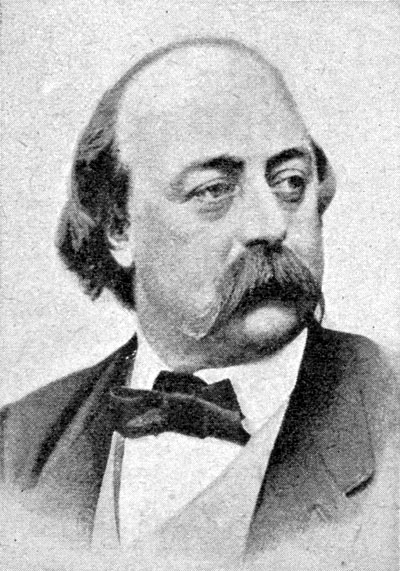
December 12: Gustave Flaubert (1821-1880)

Born on this date in Rouen was French writer Gustave Flaubert (1821-1880, shown at left). The onset of epilepsy in 1844 ended his (already wandering) interest in the study of law, and he lived at home with his mother for many years, in part out of concern for his own safety. In his best-known work, Madame Bovary (1857), Flaubert wrote a secondary character, Hippolyte, whose club foot doesn't bother him or interrupt his farm work, but doctors persuade him to have it "fixed" anyway--and he ends up with an amputation when the surgery goes wrong. His epilepsy was a secret and a rumor during his lifetime, when he would only refer to "my nervous attacks." Its possible effects on his writing have been a topic of speculation beginning with a comment by his friend Maxime Du Camp in 1882:
I am absolutely convinced that Flaubert was a writer of rare merit, and had he not been attacked by his terrible nervous illness he would have been a writer of genius.
Sartre and Vargas Llosa both considered Flaubert's seizures to be hysterical or affective, rather than entirely organic, in origin. More recent opinions have disputed this judgment.

Here are some print sources on Flaubert's epilepsy:

Gastault, Henri, Gastault, Yvette, and Broughton R. "Gustave Flaubert's Illness: A Case Report in Evidence against the Erroneous Notion of Psychogenic Epilepsy," Epilepsia 25(5)(October 1984): 622-637.

Jallon, P., and Jallon H. "Gustave Flaubert's Hidden Sickness," in Bogousslavsky and Boller, eds., Neurological Disorders in Famous Artists (Basel: Karger 2005): 46-56.

Wall, Geoffrey. "The Invisible Man: An Essay on Flaubert and Celebrity," The Cambridge Quarterly 35(2)(2006): 133-150.

Sunday, October 22, 2006

October 23: Sarah Bernhardt (1844-1923)

Today marks the 162nd anniversary of the birth of French actress Sarah Bernhardt, born Henriette Rosine Bernard in Paris on this date (or this week, anyway--sources disagree as to the precise date) in 1844.

In 1905, she injured her right knee during a performance in Rio de Janeiro. Ten years later, when Bernhardt was 71, she had the leg amputated, and began to use a wooden prosthetic leg. Bernhardt's fans, and there were many, waited anxiously for news of her recovery. The story goes that the manager of the Pan-American Expo in San Francisco sent a telegram, offering her $100,000 in exchange for the right to exhibit her leg. Bernhardt's reply message said only "Which leg?" (She did not accept the offer.)

Bernhardt appeared in several stage plays and in at least two films after her amputation. Theatre historians believe that the change may actually have improved her acting: without access to grander physical dramatics, she chose roles carefully, and concentrated on the use of her 'golden' voice, facial expressions, and subtler gestures to communicate character.

See also:

The Sarah Bernhardt Collection at the Harry Ransom Humanities Research Center at the University of Texas at Austin