Showing posts with label writer. Show all posts
Showing posts with label writer. Show all posts
Thursday, January 20, 2011
RIP: Reynolds Price (1933-2011)
North Carolina writer Reynolds Price died today, from a heart attack, just before his 77th birthday, according to a Duke University press release and the Charlotte Observer. Here's the birthday post we had for Price at DS,TU in 2007.


Tuesday, January 05, 2010
January 5: Thomas Pringle (1789-1834)

[Image description: engraved head-and-shoulders portrait of Thomas Pringle as a young man, balding, with long sideburns and a high-collared white shirt, head resting on one hand.]
Scottish poet, editor, and abolitionist Thomas Pringle was born on this date in 1789, on a farm in Blaiklaw, Roxburghshire. As a baby, his hip became dislocated, and the dislocation went untreated; Pringle used crutches throughout his life thereafter. From his memoirs:
"My early reminiscences reach back to a period when I must have been about three years old, or little more. I remember of being carried to Kelso when about that age, and being tormented by doctors examining my limb, and making me wear a red morocco boot, with steel bandages to keep it in some prescribed position. These appliances were of no advantage, and were, ere long, superseded by a pair of crutches. The latter I soon learned to use with such ease and adroitness that, during my boyhood and youth (when I generally enjoyed robust health), I felt but little incommoded by my lameness."Pringle's later adventures included a six-year stint as a librarian in South Africa, where he was an early publisher of English-language news and literary publications. His work in publishing and abolition led to his role as the recorder of Mary Prince's narrative, which was published in 1831. Pringle died three years later, from pneumonia, age 49.
Friday, July 04, 2008
July 4: Christine Lavant (1915-1973)
 [Image: Black-and-white photo of a woman, Christine Lavant, wearing a headscarf, gazing at an empty glass of tea on the table she's seated behind]
"Illusions, to be sure, are safe, are precious, but the truth is
usually more important."
--Christine Lavant
Austrian poet Christine Lavant was born on this date, the youngest in a big family based in a Carinthian village. Her father was a miner, her mother a seamstress. Christine was sick a lot as a kid--one infection damaged her vision when she was an infant, another made her deaf in one ear as a teenager; her face and neck bore the scars of experimental x-ray treatments; tuberculosis and depression were also in the mix. At 20, she was hospitalized for six weeks after a suicide attempt; in 1946 she recorded the experience in "Memoirs from a Madhouse," but wouldn't allow its publication until decades after her death. It's now available in an English translation (Ariadne Press 2004).
Lavant became a highly respected poet in Austria, and won the Grand State Prize for Literature in 1970. One of her short stories, "Das Kind" (1948) is about a hospitalized child, bandaged, confused, lonely, dreaming of her family. Her 1956 volume of poems, Der Bettlerschale (The Begging Bowl) reflects her themes of need, abandonment, alienation, and melacholy. A 1978 collection of her poetry appears under the title Art Like Mine Is Only Crippled Life (from a quote by Lavant). There are English translations of a few Lavant poems here and here.
Sunday, May 11, 2008
May 11: Stanley Elkin (1930-1995)
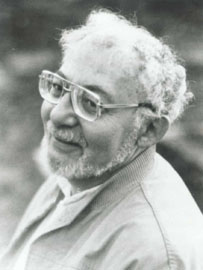
[Image description: Stanley Elkin, head-and-shoulders view, he's wearing glasses and has a close-cropped white beard and curly hair; he's smiling slightly]American writer Stanley Elkin was born on this date in 1930, in New York City. Elkin was a professor of English at Washington University in St. Louis. In 1972, he was diagnosed with multiple sclerosis (MS); from the mid-1970s, he used a wheelchair or a walker.
There is no way in the world I could ever take revenge on the disease that has disabled me. It just seems to me that disease, because it flirts with death, is a rather important subject to write about.
--Stanley Elkin
Elkin's experience as a disabled person was reflected in his critically-acclaimed fiction, which had long tended towards dark comic observations, inventive language, and complicated plots centered on deeply flawed characters. Ben Flesh, the main character in The Franchiser (1976), has MS too; in Magic Kingdom (1985), the plot follows a group of terminally ill children who are treated to a Disney World vacation by a wish-granting charity. The children resent being made into pitiful spectacles by the charity's publicity, and wish only to be left alone together to share as peers. The novella "Her Sense of Timing" (1993) is about Professor Schiff, a political geographer with MS, who uses a wheelchair, and must prepare and host a party without the expected help of his wife. In 1993, Harper's Magazine published "Out of One's Tree: My Bout with Temporary Insanity," in which Elkin describes a two-week, prednisone-induced psychosis he experienced from prescription medication for his MS.
Stanley Elkin died in 1995, from complications following heart surgery. His papers are at Washington University in St. Louis.
Tuesday, March 25, 2008
Remembering Herschey Lang (1912-1917)

[Image description: old, damaged photo of a little boy, Herschey Lang, wearing a hat and coat.]Bella Cohen Spewack (1899?-1990) was a journalist, a publicist, and a writer for stage and screen, best known as the co-writer of the show Kiss Me Kate. But in 1922, while living in Berlin with her new husband, working as a news correspondent, Bella Spewack also wrote a fierce, funny, poignant memoir of her youth, titled Streets. The memoir wasn't published until after her death (it's available from Feminist Press); but because it was written and eventually published, we can remember Bella's little brother Herschey Lang, and have a glimpse of family life in the Lower East Side of the 1910s.
Herschey was born to Fanny and Hoosan Lang, both recent Jewish immigrants from Hungary, when Fanny's daughter Bella Cohen was 13. When he was born, his father brought home to the family's tiny apartment a yellow wood cradle; three cents worth of jelly beans were scattered under his mattress, to ensure a sweet life. Needlework pillowcases and tiny knitted caps were brought as gifts, by neighbors. Then, when he was six months old, Herschey got sick: a rash of sores erupted on his face, arms, and hands. The sores left scars. Hoosan Lang shouted at Fanny, "You wretch! You have brought me trouble! You have borne me a sickly child. And a son, God in heaven, a son!" (pp. 77-79) Hoosan left, while Fanny was pregnant with their second child, Daniel Lang.
Fanny moved herself and her children to a cheaper apartment, using a pushcart to transport their belongings. Bella took care of her little brothers in the streets, while their mother did sewing at home, and tended to their boarders. Herschey learned to walk on the corner of Houston and Goerck Streets, near the Third Street pier. Bella remembered the stares and insults:
Frequently women, and men too, would stop and unashamedly stare at the two in the carriage. Pregnant women looking at Herschey's disfigured face would stick their thumbs in their belts and immediately look away [a superstitious gesture to prevent ugly children].When the pier got a little too pungent in the summer heat, Bella took the little ones to a playground, where they could play in sand and take turns on the swings. She also included the boys in her dramatic productions with neighborhood teens: they played a stringed instrument during a scene from Romeo and Juliet, enacted on a tenement fire escape. Fanny and Bella got summer jobs working at a resort in the Catskills, and the boys came along, so they could eat better and get some fresh air. "I was fierce with desire that children play with Herschey," Bella recalled about that time, "for they shunned him and he loved them dearly." (p. 125) Soon, the management noticed how sickly Herschey was, and sent the whole group back to the city.
One woman, whom I had seen frequently on the block, laughed outloud on seeing Hershey. The black salve that I had applied in the morning was still on his face. "Look at the little rat." For a moment, I felt as if the roaring in my ears and the pounding within me would never stop. Then I walked over to the woman and struck out. My outstretched hand landed on her neck.
That woman never again stopped near Herschey's carriage, but when she saw me, with or without him, she would cross to the other side of the street. As her revenge, she tried to spread the rumor that I was crazy, but the street chose not the believe her. (102-103)
Herschey Lang died at age 5, after a long illness that included fevers and paralysis and a lot of lost weight at the end. "My mother was mad with the pain of her loss," explains Bella (p. 157). "So it fell to me to arrange for the burial." The last sentences of the memoir present a painful scene: "My mother and I, carrying Danny in my arms, attempted to follow the hearse on foot for we could afford no carriage. But the hearse moved swiftly. Herschey was light."
Herschey Lang didn't live long, but he was loved, dearly loved, by his mother and sister, right to the end. And he was never forgotten.
See also:
Lisa Muir, "Rose Cohen and Bella Spewack: The Ethnic Child Speaks to You Who Never Were There," College Literature (Winter 2002), online here.
Saturday, March 15, 2008
Why I love biographical dictionaries
One sentence, from the entry about writer Ethel Anderson (1883-1958) in the Australian Dictionary of Biography online, written by Martha Rutledge:
"Somewhat formidable in later life, Ethel became quite deaf and brandished an immense, silver ear-trumpet, adorned with chiffon to match her dresses."Somewhat formidable, indeed!
Monday, February 25, 2008
February 26: Lesya Ukrainka (1871-1913)

[Image description: an oval framed, black-and-white portrait of a young woman in an embroidered blouse and jacket]
Who told you that I'm weak,Ukrainian poet Lesya Ukrainka was born Larysa Kosach on this date (more or less--depends on which calendar you follow) in 1871. From age 10, she had chronic joint and bone pain caused by tuberculous arthritis. In search of relief, she traveled a lot to warmer places, seaside towns on the Crimea, in Italy, in Egypt, and elsewhere. Her parents taught their children Ukrainian language and culture, when such things were banned in the Russian-run schools. As a result, she took the pen name "Ukrainka" (Ukrainian woman), and published poetry, drama, essays, and literary criticism, all informed by her study of Ukrainian folktales, history, and culture. Her controversial works had to be published in another part of Ukraine, outside Russian jurisdiction. (She also published translations, including a 1902 translation of the Communist Manifesto, which got her arrested.) The ferocity of her cultural nationalism was often contrasted with her physical "frailty," a false contrast that provoked her to write the lines above.
That I succumb to fate?
My voice is strong when I speak,
My thoughts and songs vibrate.
Today, there are monuments to Ukrainka throughout Kiev--and a boulevard named for her. There's also a monument to her at the University of Saskatchewan, and another in downtown Cleveland. Her image has been featured on Ukrainian postage, coins, and banknotes.
Monday, February 18, 2008
February 19: Amy Tan (b. 1952)
 [Image description: Amy Tan, wearing a purple and black blouse and a chunky pendant]
I have neuropathy, which makes it difficult to walk. At one point I thought I would be in a wheelchair. That's the reason for the funny shoes; they are orthopedic shoes, and they do enable me to walk – and I'm determined now to walk many miles in Bhutan. I have set my goals differently these days; I can struggle through pain and limitations if I find the right motivation. I also have seizures. I can't drive. I have to be careful if I do certain things and I'm by myself, but I'm not going to let that limit me in certain ways. I just have to adapt my life in other ways. One of my adaptations has been to have a constant companion, my dog. And I have trained my dog to do certain things to help me, to not walk into streets when I'm not paying attention, or to get help from my husband or to let me know that what I see in front of me is in fact not real. (Quote from a 2004 interview, found here.)Popular novelist Amy Tan was born on this date in 1952, in Oakland, California. Readers who enjoy her fiction may not be aware that Tan has experienced significant neurological impairment from undiagnosed Lyme disease in 1999, as described in the quote above. She has a page at her website detailing her medical odyssey toward a diagnosis and appropriate treatment, and the everyday lasting effects of late-stage neuroborreliosis. It's also one theme in Tan's 2003 book of essays, The Opposite of Fate.
Monday, September 03, 2007
September 3: Sarah Orne Jewett (1849-1909)

American writer Sarah Orne Jewett was born on this date in 1849, in South Berwick, Maine. She had rheumatoid arthritis from childhood, which must have been especially difficult living in northern New England long before central heating. Brrrr.
But her family (including her father and grandfather, both doctors) encouraged an active and independent childhood when possible:
...the Jewetts took a philosophical view of Sarah's illness, neither denying nor belittling it nor allowing to tyrannize over her life. They were sympathetic, but there was always the expectation that as soon as the pain subsided there were duties and diversions waiting, most of them outdoors. Her father believed that exercise was as important as rest in keeping the disease at bay, and she became amazingly active and sturdy, considering her handicap. A strong cross-country walker, she liked best to strike out across the fields, taking a book along, hunting out rare flowers and herbs and visiting favorite trees as if they were old friends. She was an expert horsewoman and rower, and she enjoyed skating, swimming, and coasting.(from Paula Blanchard, Sarah Orne Jewett: Her World and Her Work [DaCapo Press 2002]: p. 31)
Sunday, February 11, 2007
February 11: Jane Yolen (b. 1939)
 |
| Author Jane Yolen, holding a picture book |
- The Boy who had Wings (1974) is considered deformed by his herding village, until he saves his father during a storm and becomes a hero (illustrated by Helga Aichinger)
- The Seeing Stick (1977), in which a blind Chinese princess learns to "grow eyes on the tips of her fingers" with the help of an old wizard (illustrated by Demtra Marsalis)
- The Sultan's Perfect Tree (1977) teaches that perfection is a dangerous goal for any living thing, because it means the end of growing and changing (illustrated by Barbara Garrison)
- The Mermaid's Three Wisdoms (1978), in which a deaf girl rejects sign language until she meets a mermaid, who explains to her that speech is useless underwater, and all the mer-people sign with fluid beauty (illustrated by Laura Rader)
- Greyling (1991) is about a seal-boy, a selchie, "a strange child with great grey eyes and silvery hair," whose unique makeup suits him for the rescue of his father at sea (there are editions variously illustrated by William Stobbs and by David Ray)
- Good Griselle (1994), about a lonely woman in medieval Paris, asked to raise "the ugliest child she had ever seen"--in fact, he's a small gargoyle in disguise, but together they find happiness (illustrated by David Christiana)
Thursday, February 01, 2007
February 1: Reynolds Price (b. 1933)
 Your chance of rescue from any despair lies, if it lies anywhere, in your eventual decision to abandon the death watch by the corpse of your old self and to search out a new inhabitable body.
--Reynolds Price
North Carolina writer, Duke English professor, former Rhodes scholar Reynolds Price was born on this date in 1933, in Macon NC. He's been using a wheelchair since the mid-1980s, when he survived a spinal cancer that was considered terminal by his doctors. His A Whole New Life: An Illness and a Healing (Athenaeum reprint 1994; also available as an audiobook) is a cancer memoir about the spiritual and psychological aspects of his recovery and pain management; Feasting the Heart: Fifty-two Commentaries for the Air (Scribner 2000) compiles many of his NPR essays, including several on disability ("Wheelchair Travel," "Eye Level to a Wheelchair," "The Last Great Weeper").
Tuesday, December 12, 2006
December 12: Gustave Flaubert (1821-1880)
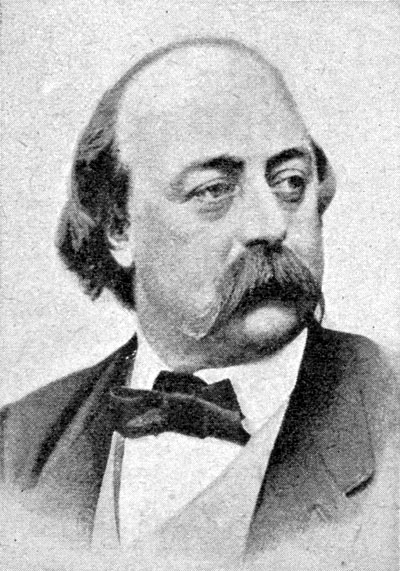 Born on this date in Rouen was French writer Gustave Flaubert (1821-1880, shown at left). The onset of epilepsy in 1844 ended his (already wandering) interest in the study of law, and he lived at home with his mother for many years, in part out of concern for his own safety. In his best-known work, Madame Bovary (1857), Flaubert wrote a secondary character, Hippolyte, whose club foot doesn't bother him or interrupt his farm work, but doctors persuade him to have it "fixed" anyway--and he ends up with an amputation when the surgery goes wrong. His epilepsy was a secret and a rumor during his lifetime, when he would only refer to "my nervous attacks." Its possible effects on his writing have been a topic of speculation beginning with a comment by his friend Maxime Du Camp in 1882:
I am absolutely convinced that Flaubert was a writer of rare merit, and had he not been attacked by his terrible nervous illness he would have been a writer of genius.Sartre and Vargas Llosa both considered Flaubert's seizures to be hysterical or affective, rather than entirely organic, in origin. More recent opinions have disputed this judgment.
Here are some print sources on Flaubert's epilepsy:
Gastault, Henri, Gastault, Yvette, and Broughton R. "Gustave Flaubert's Illness: A Case Report in Evidence against the Erroneous Notion of Psychogenic Epilepsy," Epilepsia 25(5)(October 1984): 622-637.
Jallon, P., and Jallon H. "Gustave Flaubert's Hidden Sickness," in Bogousslavsky and Boller, eds., Neurological Disorders in Famous Artists (Basel: Karger 2005): 46-56.
Wall, Geoffrey. "The Invisible Man: An Essay on Flaubert and Celebrity," The Cambridge Quarterly 35(2)(2006): 133-150.
Friday, November 17, 2006
November 17: Dahlia Ravikovitch (1936-2005)
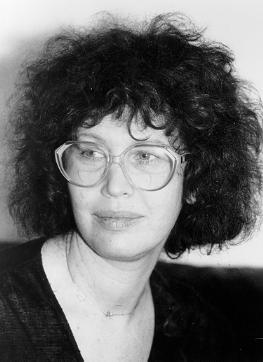
When I am depressed, I am less than a driven leaf.
Today (or November 27) would have been the seventieth birthday of Israeli poet and translator Dahlia Ravikovitch (also sometimes found as Dalia Rabikovitz), who died last year in Tel Aviv (suicide was presumed, but later dismissed, as the cause). Ravikovitch has been called "the greatest Hebrew woman poet of all time," and her ten books of poetry include verses taught to Israel's schoolchildren and set to music. She also translated poems by Yeats, TS Eliot, and Poe, as well as PL Travers's Mary Poppins. She slept days, and wrote in the night. She wrote only by hand (no typewriter or computer), and kept every draft she ever penned, back to school notebooks from childhood.
Ravikovitch spoke and wrote about her life with depression, including hospitalizations and several suicide attempts. One of the stories in her collection Winnie Mandela's Football Team (1997) is set in a psychiatric hospital; her poem "Pride" ends with the lines
I told you, when rocks crack, it comes as a surprise.
All the more so, people.
Friday, August 11, 2006
August 11: Louise Bogan (1897-1970)
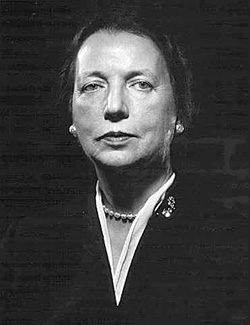 American poet Louise Bogan was born on 11 August 1897, in a mill town in Maine. She reviewed poetry for the New Yorker for almost thirty years; and she experienced depression throughout her life, times she described as "tearless sorrow." She was (voluntarily) committed for psychiatric hospitalization more than once in the 1930s.
Here's a poem by Bogan (copied from here):
Evening in the Sanitarium
The free evening fades, outside the windows fastened with decorative iron grilles.
The lamps are lighted; the shades drawn; the nurses are watching a little.
It is the hour of the complicated knitting on the safe bone needles;
of the games of anagrams and bridge;
The deadly game of chess; the book held up like a mask.
The period of the wildest weeping, the fiercest delusion, is over.
The women rest their tired half-healed hearts; they are almost well.
Some of them will stay almost well always: the blunt-faced woman whose thinking dissolved
Under academic discipline; the manic-depressive girl
Now leveling off; one paranoiac afflicted with jealousy.
Another with persecution. Some alleviation has been possible.
O fortunate bride, who never again will become elated after childbirth!
O lucky older wife, who has been cured of feeling unwanted!
To the suburban railway station you will return, return,
To meet forever Jim home on the 5:35.
You will be again as normal and selfish and heartless as anybody else.
There is life left: the piano says it with its octave smile.
The soft carpets pad the thump and splinter of the suicide to be.
Everything will be splendid: the grandmother will not drink habitually.
The fruit salad will bloom on the plate like a bouquet
And the garden produce the blue-ribbon aquilegia.
The cats will be glad; the fathers feel justified; the mothers relieved.
The sons and husbands will no longer need to pay the bills.
Childhoods will be put away, the obscene nightmare abated.
At the ends of the corridors the baths are running.
Mrs. C. again feels the shadow of the obsessive idea.
Miss R. looks at the mantel-piece, which must mean something.
See also:
Nell Casey, ed. Unholy Ghost: Writers on Depression (Harper Collins 2001).
Subscribe to:
Posts (Atom)

