Sunday, October 23, 2005

Changing Social Representations of Disability

Mike Dorn, Coordinator of Temple University's Graduate Certificate in Disability Studies and Assistant Professor in the Urban Education Program, helped kick of the Pennsylvania Association of Rehabilitation Facilities (www.parf.org) conference at Penn State on September 28, 2005, where he appeared on a plenary panel together with disability studies scholars Douglas Biklen of Syracuse University and Michael Berube of Penn State. Each were invited to speak very generally on the representation of people with disabilities; Mike Dorn, a cultural geographer, offered an overview of the historical construction of disabled bodies and the institutions charged with “administering” disability in the Philadelphia area during the nineteenth century. Douglas Biklen spoke of the representation of mental retardation in films like "There’s Something About Mary", "The Eighth Day", and "Rain Man". Michael Berube wrapped up the panel with a critical analysis of racial and disability discourse in the media coverage of Hurricane Katrina. All of the papers will appear in the meeting proceedings. Michael Berube has also posted his paper on his blog, http://www.michaelberube.com/index.php/weblog/disability_and_disasters/

On October 18th, Mike Dorn was also interviewed on the potential of websites and blogs as avenues for reaching consumers with disabilities. The story will appear in OMMA: The Magaine of Online Media, Marketing, and Advertising (http://publications.mediapost.com).

Saturday, October 22, 2005

Shout Out for Disability Culture

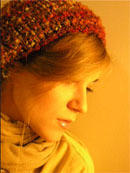
I guess I am a diehard skeptic, or at least more dubious that I realized I was. I never thought I would experience disablity culture in a truly arts culture way heading out to the clubs last night, but "hallelujah" I was wrong. Instead I stumbled upon a Summa Cum Lade experience combining disability culture, Deaf culture, and a cool intertergenerational vibe. Mike happened upon an interview and the notice about an upcoming show over the internet, and together with my friend Matina we set out for our inocuous coffeehouse, the 50 year old Staten Island Club for the Deaf. If you were to attempt to characterize us, our group was composed of a middle class able-bodied white male, a physically disabled feminist and a beautiful French-speaking Liberian. We certainly didn't feel like we were a 'typical' audience for this club. But somehow when we entered this small, retro-looking cafe, our identities seemed to merge and at the same time became magnified and more defined. I sat next to this chic looking woman with so much classical, artsy essence coming from her outward as well as inner presentation. She initiated conversation (small talk) with me, an act that flattered me. As we progressed in our conversation I suddenly realized I was hanging with the performer that we came to see. Her unassuming, modest demeanor didn't surprise me, though. Usually the bigger the talent the smaller the scaffolded ego.


This woman, Melody Gardot, is a huge talent. She sings her songs without pretense, just as she interacts with strangers who she has never met. Her voice was confident and mature. a direct contrast to her fresh, youthful appearance. At times, it was hard to wrap my head and spirit around her persona . She sang the narrative of a life I had myself experienced; how could she know these feelings, this wisdom, this cruel reality, this power to toss your head and look people in the eye, letting them know you're going to be who you're going to be? I don't know whether Melanie identifies herself with the worn and tattered disability rights community but if she doesn't, that's alright ... it's all good. Better than good. It's fine and Melanie Gardot is a colorful, striking swath of fabric, essential to creating the more vivid and striking Disability Culture quilt of the twenty-first century.
Melody's personal website - http://www.myspace.com/melody
Melody's professional site - http://www.melodygardot.com
Original interview Mike read - http://www.phillyfuture.org/node/1759
(overly dramatic, but I'm glad I found it! MD)

Tuesday, October 18, 2005

"Crazy Bet" and her 19c sisters

Reading fiction and researching fact this week has kept me thinking about how easy it has been in the past for women to slip into the category of "madwomen"--either intentionally, or at the convenience of others.

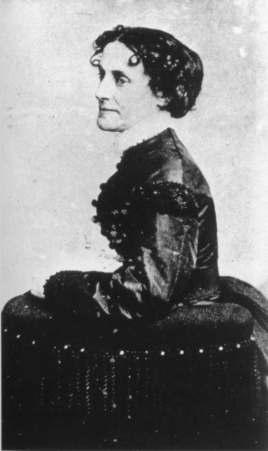
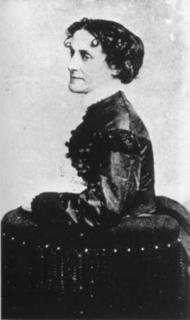
First, the factual case: Elizabeth "Crazy Bet" Van Lew (1818-1900, pictured at left), lifelong Richmond VA resident, was also a Quaker-educated abolitionist who convinced her mother to free their family's slaves in the 1850s. By the time the Civil War started, Elizabeth was a spinster in her forties, and her politics had already made her seem odd. It didn't take much to nudge her own reputation into the "madwoman" zone--she just dressed shabbily, kept her hair messy, and muttered to herself, enough that she was seen as a harmless wretch. Thus, she managed to maintain an amazing network of informants and message-passing, enough that Ulysses S. Grant considered her an invaluable source of wartime intelligence. After the war she was intensely disliked and impoverished (she spent her family's fortune during the war, in part for bribing wardens and such), but was given the government job of Postmistress of Richmond in recognition of her service; when she died, grateful Bostonians erected a memorial over her Richmond grave.

But the more usual story we find is the sadder case: I just read Jean Rhys's Wide Sargasso Sea (1966), in which two women are accused of madness, or driven to it, or both. A mother's disabled child dies after injuries sustained in a fire--and her frantic despair is enough to call her mad, and lock her away forever. Her daughter is accused of madness by association, because a fortune-seeking husband wants her out of the way. The unnamed husband is meant to be the Rochester character in Jane Eyre; the wife, the archetypal "Madwoman in the Attic" in the same novel. Rhys took on the challenge of filling out Bertha Mason's back story, to brilliant effect. The women are friendless, in the sense of having no one with any power who can help them. They have husbands, but the husbands are part of the effort to see madness in every quirk.

The husband problem reminded me of Elizabeth Packard, the midwestern minister's wife who was institutionalized in the 1860s because she didn't want to attend church with her mate. When she got out (after three years), she worked for reforms in state asylums, including the freedom of inmates to receive and send mail, and stricter standards for certifying insanity, especially in the case of married women. In 1864, in Illinois, only her husband's word and one doctor's testimony were necessary to put her away.

It was so, so easy to see a woman as a madwoman in the 19th century, especially if the beholder needed her to be mad. Elizabeth Van Lew found a way to use this thin line to her advantage; Elizabeth Packard worked to protect the women who might too easily be pushed over that line by their husbands.

Print sources of further information:

Elizabeth R. Varon, Southern Lady, Yankee Spy: The True Story of Elizabeth Van Lew, A Union Agent in the Heart of the Confederacy (Oxford University Press 2003).

David D. Ryan, A Yankee Spy in Richmond: The Civil War Diary of 'Crazy Bet' Van Lew (Stackpole Books 1996).

Myra Himelhoch and A. H. Shaffer, "Elizabeth Packard: Nineteenth-Century Crusader for the Rights of Mental Patients," Journal of American Studies 13 (3)(1979): 343-375.

Barbara Sapinsley, The Private War of Mrs. Packard: The Dramatic Story of a Nineteenth-Century Feminist (Kodansha America 1995).


Friday, October 14, 2005

Paul Pena, 1950-2005

The recent passing of bluesman Paul Pena earlier this month got a mention in the New York Times, Time magazine, Billboard, and elsewhere. Pena, born in Massachusetts to Cape Verdean immigrant parents, was blind from birth, and attended the Perkins School for the Blind near Boston. He is best known most recently for his explorations of traditional Tuvan throatsinging, as documented in the film Genghis Blues. He taught himself the unusual vocal skill, and became the 1995 "kargyraa" style throatsinging champion in a competition held at the National Theatre of Tuva. Later in life he used a wheelchair. He died from complications related to pancreatitis and diabetes.

Thursday, October 06, 2005

Panel to catch this weekend...

It's exciting to see more and more disability studies panels on conference programs. But Kestrell gives us the heads up that she'll be part of a session this weekend that sounds like a great time:
Representations of Disability and Difference in the Harry Potter Universe
9:00 am - 10:45 am
Alicia Verlager (that's "Kestrell")
Mike Gill
Heeral Mehta-Parekh
Maria Molnar
Gotta be there? Well, get to Salem, Massachusetts, this weekend (6-10 October) for "The Witching Hour," a symposium on the Harry Potter phenomenon. Elsewhere on the program are Heather Lyda, speaking on "Harry Potter: Disability Fantasy," and Shannon White speaking on "Luna Lovegood as Holy Fool."

(I believe this is my second Harry Potter reference in this blog--maybe I should explain that I've never read or owned any of the books, and only watched one of the movies. My reading kid is still a little too young for Potterdom; but I know, I know, the day is coming... --PLR)

Monday, October 03, 2005

Disability Blogs Roundup, #3

Michael Bérubé gets first mention here, for all kinds of reasons: he's a friend-of-a-friend (through Penn State hockey), his writing was the first disability studies stuff I ever read (1994), at a time when I really needed that perspective; and he produces one fine blog. Oh, and his post on Disability and Disasters mentions DS,TU's own Mike Dorn. So go read it.

Next Mary Johnson deserves notice, for two long posts at Edge-Centric on Gonzales v. Oregon, an upcoming Supreme Court case on physician-assisted suicide. On a related topic, Ballastexistenz writes on why the crime of murdering one's adult child is somehow mitigated in the public mind when that child is disabled. "Not really a threat to anyone," she sums up the prevailing opinion. "Just killed her own son, but isn't really a threat to anyone."

Disability etiquette seems to be an ongoing issue, on blogs about disability and elsewhere. The Angry Gimp ponders how she wants to answer the blunt question, "What happened to you?" Her answer (and it's not everyone's): "I'd rather someone take the risk of offending me than feeling alienated and curious for years." But on the wicked side, "It's fun telling people that I've broken 27 bones and watching their eyes pop out of their head."

Lots of non-disability bloggers might find Angry Gimp's post enlightening; there still so much work to be done in dispelling the pity/horror/guilt-driven responses to disability. Xta and Entelechy both posted recently about a lurking discomfort in the presence of people with severe disabilities. The Feminist Mormon Housewives were discussing how they felt about having designated parking for expectant mothers, right alongside (or more likely, in place of) the wheelchair-accessible parking.

Meanwhile....Kestrell's kinda hoping new technology will let her get a braille tattoo...and Scott Rains knows where you can find an accessible restaurant in New Delhi (with a photo of the new ramp at Nirula's to prove it).

As usual, tips are always welcome. The next roundup should post in early November.

Friday, September 30, 2005

Speaking of films...

There will be a Disability Film Festival and Speaker Series in October, co-sponsored by the SUNY-Buffalo School of Social Work and People Inc.'s Museum of disABILITY History. So if you're in Buffalo, NY, any Thursday night in October, make your way to the Dipson Market Arcade Film and Arts Center for 7pm. Here's the film schedule and the speaker schedule.